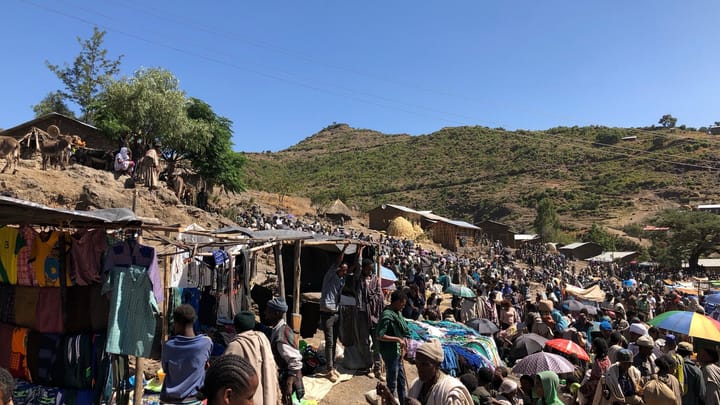
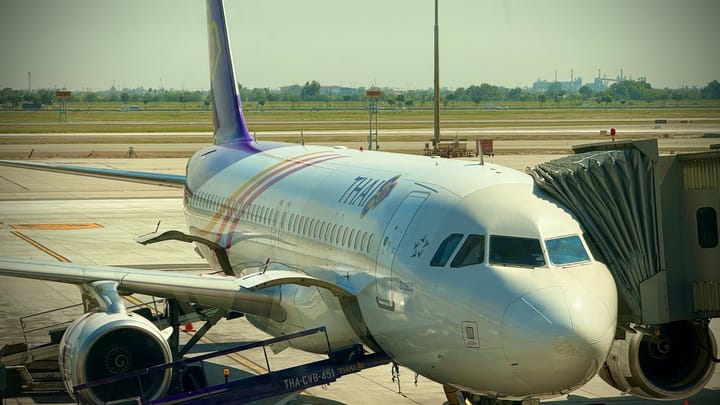
Of Course There's a Mall
More same same than different. Big companies own most of it. Maybe we're living in one big mall?
I needed a month of travel insurance recently. Málaga to Istanbul, back to Spain, ending in San Sebastián. I pulled up WorldTrips and SafetyWing, spent an embarrassing amount of time comparing the terms, and concluded there wasn't much difference between them.
There wasn't. They're both underwritten by Tokio Marine. Same same but different, as the vendors in Southeast Asian markets say. Two policies, one company. Most of the travel industry works that way.
The underwriter—Tokio Marine in this case—is the factory. They write the policy language, set the coverage terms, hold the reserves, and pay the claims. WorldTrips and SafetyWing are the labels. Different label, same pants. This isn't unusual: most U.S. travel insurance policies trace back to roughly ten underwriters globally.
I've been doing this for eleven years. I've crossed into countless countries. I still spent twenty minutes comparing two products from the same Japanese conglomerate without noticing.
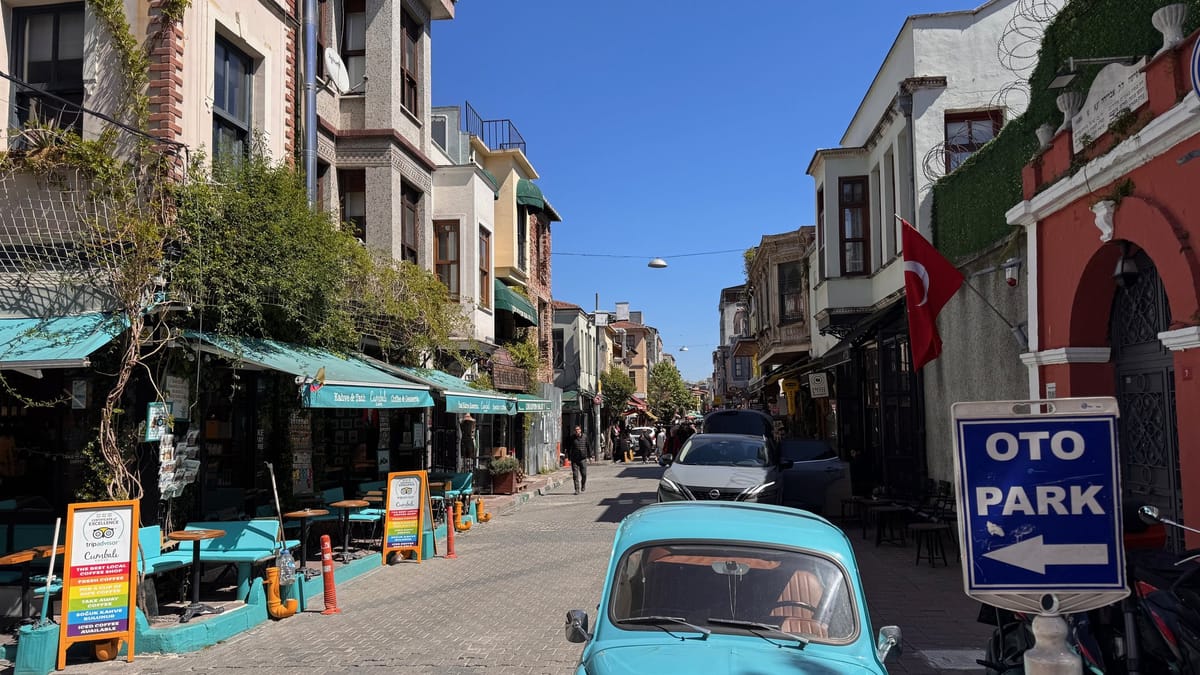
When we told someone we'd been to a mall in Istanbul, they were surprised. Couldn't quite believe it. Istanbul—ancient, layered, the city where Europe runs out of road—has malls. Of course it has malls. It has millions of people with disposable income and a taste for H&M and Zara and Apple and a food court with a Burger King. The Istanbul mall and the Bangkok mall and the Bogotá mall have different names on the outside. The same 150 stores are inside.
The ride to get there was Uber. In Southeast Asia it's Grab—a separate company, listed on Nasdaq, but one in which Uber has historically held a significant stake. Different brand, same origins.
The boutique hotel you found on a small European booking site is, with some frequency, an Autograph Collection property. Autograph Collection is Marriott. The charming regional airline flying routes nobody else bothers with has a codeshare with one of three global alliances and is probably being slowly absorbed by one of them. The craft beer in Lisbon that you've never heard of is distributed by Heineken.
And the travel insurance for your Mediterranean loop—the one that felt like a considered choice between two nomad-specific products built for people like you—is Tokio Marine.
None of this is sinister. Tokio Marine is a perfectly competent insurer. The Uber driver in Istanbul was excellent. Marriott's points system is genuinely useful if you travel enough. The homogenization of the global consumer economy has produced a floor of acceptable sameness that makes moving through the world significantly easier than it used to be.
It's just that you notice it more the longer you've been at this. Early on, every city feels distinct because everything is new to you. After a decade the distinctions remain—Istanbul really is different from San Sebastián, in ways that matter and that I'd argue about at length—but the ownership underneath starts to show. The same ten insurance companies. The same four hotel conglomerates. The same brand with a different name. The same 150 stores in the mall that definitely exists.
The person who couldn't believe Istanbul had a mall had a more romantic idea of Istanbul than Istanbul has of itself. Istanbul is a city of sixteen million people. It has opinions about parking, mortgage rates, and whether the new mall on the Asian side has better food than the one near Taksim. It is, in this way, exactly like everywhere else.
We stayed in San Sebastián at a pension with three rooms. The owner—just him, his building, two rooms with ensuite baths and one with a bath down the hall—had been there for years. We chatted every morning for two weeks. No breakfast included; too small for that. We walked down the block to a pastry shop instead, open early, full of people on their way to work, run by a cheerful team who had our order ready faster than we deserved. They spoke English. Excellent coffee. Excellent pastry.
It was part of a Spanish chain.
We flew home on Iberia. Iberia, British Airways, Vueling, and Aer Lingus are all owned by the same parent company, International Airlines Group. Qatar Airways is the largest single IAG shareholder. The separate branding, at this point, feels like a formality.