Need a Base? Pay Rent Twice
Everyone asks whether we have a home base. After 11 years and 120+ countries, the answer is still no, and the question itself reveals a lot about how most people think about this life.
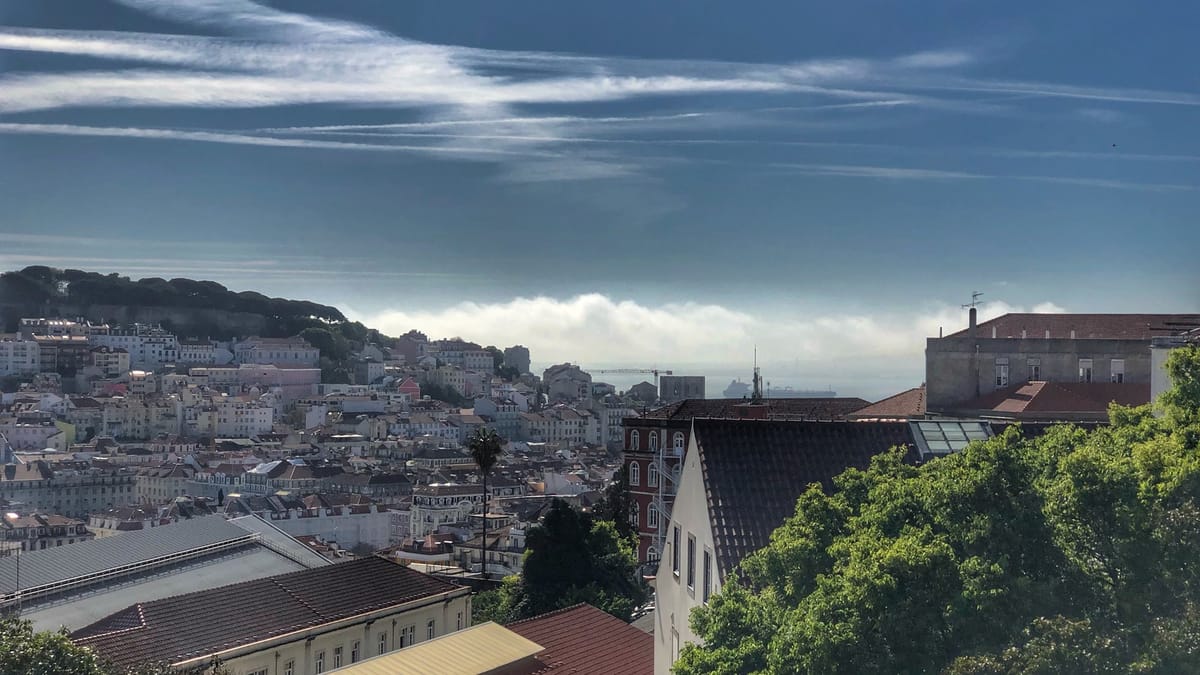
In eleven years of full-time travel, across 120-something countries with no fixed address, Lisa and I have never seriously considered getting a home base. Not after a rough month, not after a bad Airbnb, not when friends asked where we "actually live." The answer has always been the same: we live wherever we are right now. Tomorrow we'll live somewhere else.
This makes us unusual, even among nomads. The standard arc goes something like this: you leave home, you travel hard for a year or two, you slow down, and then you rent an apartment in Nice or Chiang Mai or Medellín and call it your base. You keep traveling, but you have a place to come back to. Somewhere with your winter coat and your spare charger and maybe a decent coffee setup.
It sounds reasonable, even like the mature version of the lifestyle. I think it's a trap.
A clarification before I make the case: I'm not talking about renting somewhere for three or four months and then moving on. That's slow travel. Spending a season in Oaxaca and then heading to Portugal is nomadism at a different tempo. What I'm talking about is the permanent home base: the apartment you keep year-round, the place you always return to, the address that gradually becomes the center of gravity for a life that was supposed to be in motion.
Nomad or Expat: Pick One
After a decade in this world, I've noticed that the words "nomad" and "expat" get used interchangeably, and the confusion shapes real decisions.
A lot of people who call themselves nomads are shopping for a city. They're comparing Lisbon to Medellín to Chiang Mai, ranking cost of living and cafe culture and visa rules, running a search algorithm for the best place to settle. That's not nomadism. That's apartment hunting with a longer commute.
A home base makes you an expat who travels. There's nothing wrong with being an expat, but you should know which one you are before you sign a lease.
An expat with a base pays rent on a place whether they're in it or not. They have utility accounts, maybe local tax obligations. They accumulate furniture and kitchen gear and that one lamp they found at the market.
They start thinking about the apartment when they're away from it. Did I leave the window open? Is the landlord handling that leak? Should I go back for the summer because the place is just sitting there?
That gravitational pull is the whole thing a nomad life is designed to avoid.
The Real Math
Our accommodation costs run $1,400 to $4,000 a month depending on where we are. A comparable rental in any U.S. city we'd want to live in costs about the same.
What most people miss is that a base comes on top of your travel housing. You're still paying for wherever you're staying on the road. A base roughly doubles your housing cost for the privilege of having an empty apartment somewhere.
Add property insurance, utilities, furnishing, maintenance, and the slow creep of stuff that accumulates in any space with a closet, and the math gets worse fast.
The Logistics Are Solved Problems
When people argue for a base, they usually point to logistics. Where does your mail go? What about healthcare? Don't you need a real address?
We're domiciled in Florida, which has no state income tax. Mail goes to a commercial forwarding service and arrives as PDFs. Everything that needs a home rather than a mailbox (driver's license, voter registration, banking, estate documents) carries the address of a Florida home we're authorized to occupy, and where we live when we're in the state. It's been this way for over a decade. Nothing has broken.
Healthcare is the question people expect to be the dealbreaker. Lisa carries an Allianz Care international health plan. I'm on Medicare supplemented by an international travel medical plan.
Last year I walked into a clinic in Málaga, Spain, with a problem that would have meant a $100 copay and a three-week wait for a specialist back home. I paid $35, saw the doctor that afternoon, and was done in an hour. A fixed address wouldn't have improved any part of that experience.
What People Actually Want
If the math doesn't work and the logistics are solved, the pull toward a base has to come from somewhere else.
A base makes the lifestyle into something you can point at. A visa, an insurance policy, a lease: these are tangible documents. They turn "I travel full-time" into something that looks more like a life structure and less like an extended vacation. That impulse is understandable. A life with no fixed address and no visible infrastructure can feel thin, even when it works fine.
The problem is that the impulse leads people to buy solutions to problems they don't have. A lease creates logistical problems rather than solving them. But it feels like building something, and that feeling is hard to argue with.
There are real costs to perpetual motion that I won't pretend don't exist. Decision fatigue is one. In the early years, the constant "where will I sleep, where's the grocery store, is the Wi-Fi going to work" takes genuine mental energy.
But it's a problem that solves itself. You build systems. You learn what you need from a listing. By year four or five, the cognitive load of moving is roughly the same as the cognitive load of staying.
The other real cost is community. It's hard to maintain deep, proximity-based friendships when you leave every few weeks. That's a trade-off of the lifestyle itself, though, and a base doesn't fix it. You can have a lease in Lisbon and still not know your neighbors.
Younger nomads pair a base with a digital nomad visa, and the combination transforms "I'm taking a year off" into "I live in Greece." That feels like a bigger deal, even when the practical difference is negligible.
Most of them have also never dealt with property: never had a landlord who won't fix the heat, never been locked into a twelve-month lease, never spent a Saturday arguing with a contractor. Managing a place is a part-time job nobody warns you about until you're in it. (Some of this group is also gearing up for kids, which is a real reason, and the only logistical argument for a base that I can't poke holes in.)
Older nomads who came to this late have a different version of the same pull. They've always had a key on their ring that opened a door they owned or rented. The drift feels wrong because it's unfamiliar. A base lets them be adventurous without being unanchored. That's a reasonable instinct. I just think there are cheaper ways to feel settled.
And then there's the comparison instinct, which cuts across every age group. Rank the cities, weigh the options, pick the best one. Porto vs. Playa del Carmen. Beach vs. mountains. The whole exercise assumes the goal is to find the right place, when the goal of nomadism is to stop looking for one.
I've watched people agonize for months over which city to base in (reading forums, running spreadsheets, visiting candidates) and then sign a lease and feel restless within six weeks. The apartment didn't fix the restlessness. It just gave it an address.
What You Actually Give Up
A base costs you more than money.
A base kills spontaneity. You can't move on a whim when you're thinking about the apartment sitting empty. You can't jump on the cheap fare that popped up this morning because you've got a lease pulling you back in six weeks. And once you've established residency somewhere, you live under its rules: tax residency, and in many countries a residence permit that lapses if you're away too long.
A base turns movement into departure. Every trip becomes a trip from somewhere, with a return date attached. That's a fundamentally different relationship with travel than the one Lisa and I have, where there's no departure and no return, just the next place.
If you're gearing up for kids, or you need to be near aging parents, or you're managing a health condition that requires continuity of care at a specific facility, these trade-offs might be worth it. Those are life-stage realities, not failures of commitment. But if your reason for wanting a base is vaguer than that (a feeling, an instinct, a sense that you're supposed to settle down eventually), ask yourself what exactly you think the apartment is going to solve.
We're in year eleven. We just kept going.