2024 - The Last Cheap Year. We Didn't Waste It.
The year we moved faster than usual — because cheap, accessible travel as we know it may not last. Year nine, in full.
This year, our travels took us to many more countries than usual. We bounced around a lot more than normal over the past twelve months. Let me explain.
Slow travel vs fast travel
In 2015, we landed in Berlin and stayed for two solid months. We’d been told that moving slowly was the “right” way to be digital nomads. We enjoyed Berlin, but by the end of our time there, we were ready to get busy, move on, and see more places. We picked up the pace by reducing the length of our stays in each destination.
For a few years, our pattern involved staying in a couple of places for a month each, interspersed with shorter stays, often a two-week road trip. This gave us time to settle into a place, learn more about our environment, and focus on work tasks without too much disruption. That pattern worked for quite some time.
Then COVID hit and disrupted our system. To avoid the virus and comply with government regulations, we settled down for long stretches in South Korea, Iceland, Bonaire, and Thailand. This meant fewer places for more extended stays and very little advance planning due to rapidly changing circumstances.
As COVID constraints disappeared, we shifted gears and booked trips well in advance to lock in lower rates amid surging prices. This new approach led to relatively short stays and lots of movement, a reaction (perhaps overreaction) to the slow pace of travel during the pandemic.
Our fast-paced travel continued through 2023 and into 2024. Booking well in advance meant we were committed to the plan, even if we occasionally got tired of moving so frequently. We were caught between an overly ambitious pace and some great deals we didn’t want to lose by slowing down.
So the last 12 months have been about moving fast and enjoying the last gasp of reasonably priced travel that we had booked while prices were still lower. That’s a long-winded explanation of why this year’s list of stops is longer than usual. Expect my June 2025 report to be a bit shorter.
This past year in a nutshell
We were in Tokyo the last time I wrote our annual nomad update. Tokyo is the most populous city in the world, making it busy and crowded, but it’s also one of the most convenient, comfortable, and functional cities we’ve ever visited.
Japan
We've visited Tokyo several times and always enjoyed it, but this visit was fantastic. We've become very comfortable being in Japan, which is one of those places that can be a little awkward for first-time visitors. By now though, we've fully engaged with the food, the people, the transit system, and the vibe. It's not an accident that we’re already plotting our next visit. It's a great place to spend time.
Tokyo has nearly everything a city can offer—much of it is the best in the world. The coffee, the chocolate, and even the pizza beat out the best from most other places. We spent very long days exploring the nooks and crannies of the city, usually from early in the morning until evening. I even had the best dental cleaning of my life while we were there. We packed a lot into our four weeks in Tokyo.
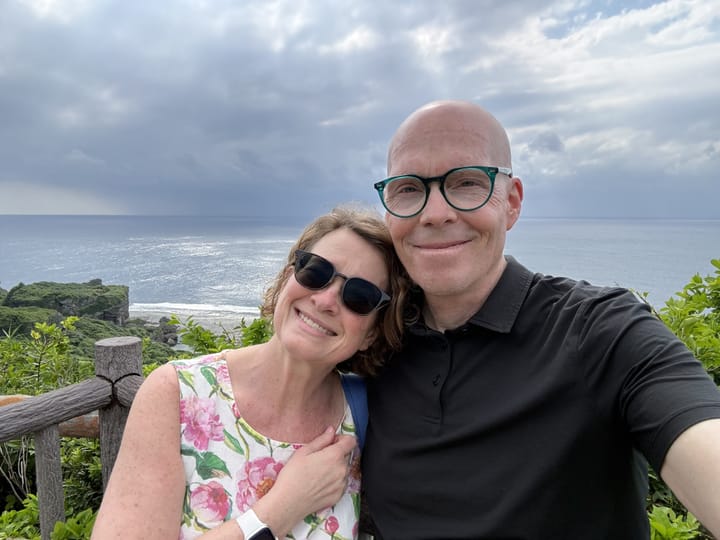
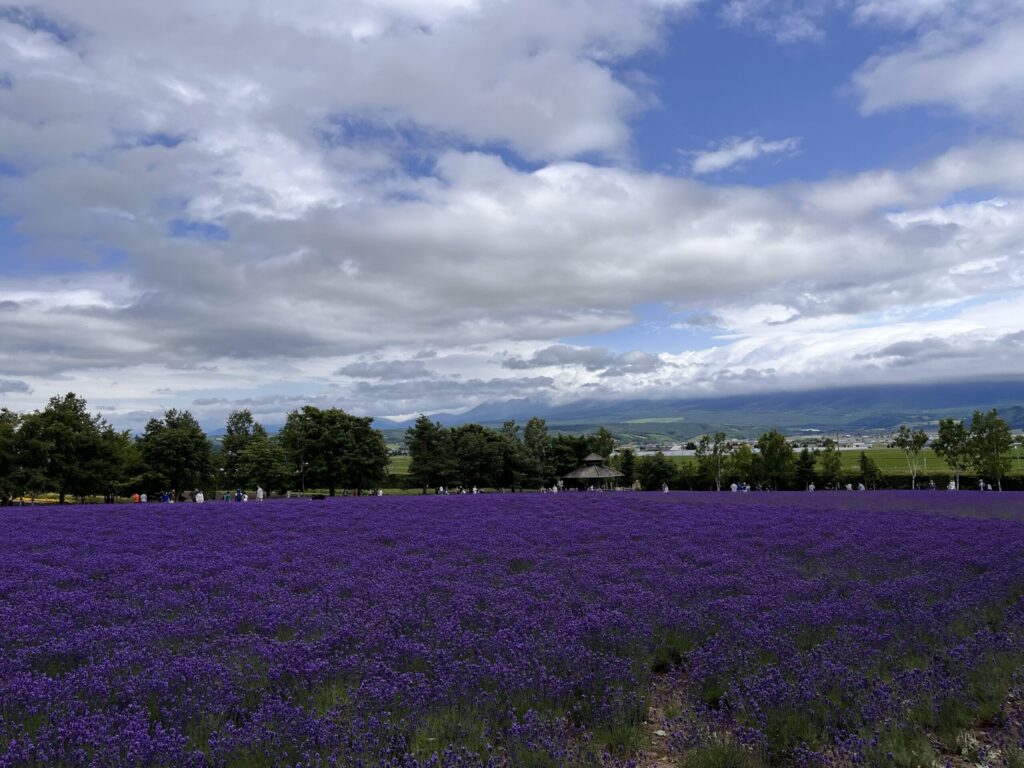
But as June turned into July, it got hot and humid, and the annual rainy season got wet. We packed up and moved to cooler weather in the mountains of Hokkaido. Our goal was to enjoy lower temperatures, and we did. A bonus was that the lavender was in bloom, and seeing that part of Japan decorated in purple was awesome.
Thailand
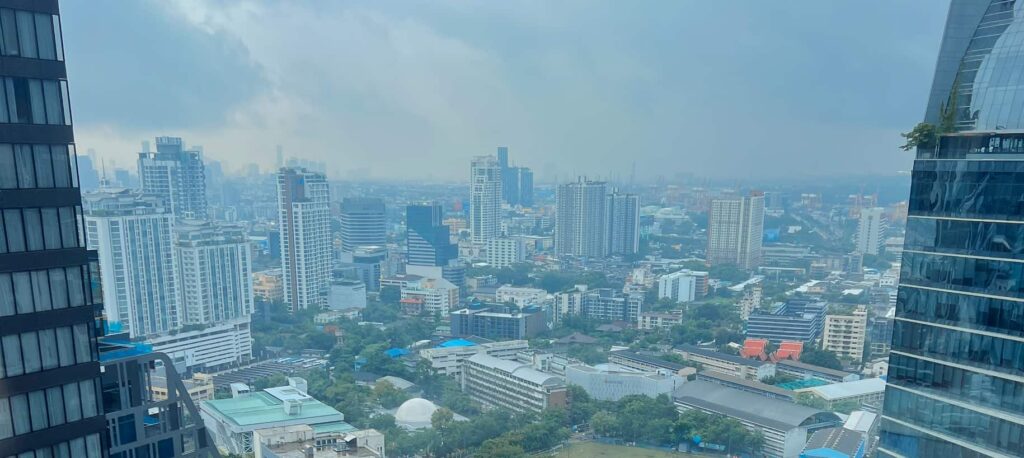
After cooling off in Hokkaido, we flew to Bangkok to spend a quick week visiting our older kid, Toby, who has lived in Thailand for ten years. Bangkok is hot, hot, hot, but it’s easy to stay in the air conditioning nearly every minute of every day.
After nine years on the road—which has become a big chunk of my life—going to Bangkok feels as much like going home as anywhere else. It's a great city that we love visiting. Plus, we like seeing our kid.
We've had some long visits to Bangkok—once we stayed in an Airbnb in our son's building for two months. This time, we only stayed a week, and Toby was grateful. A parenting lesson learned.
Italy
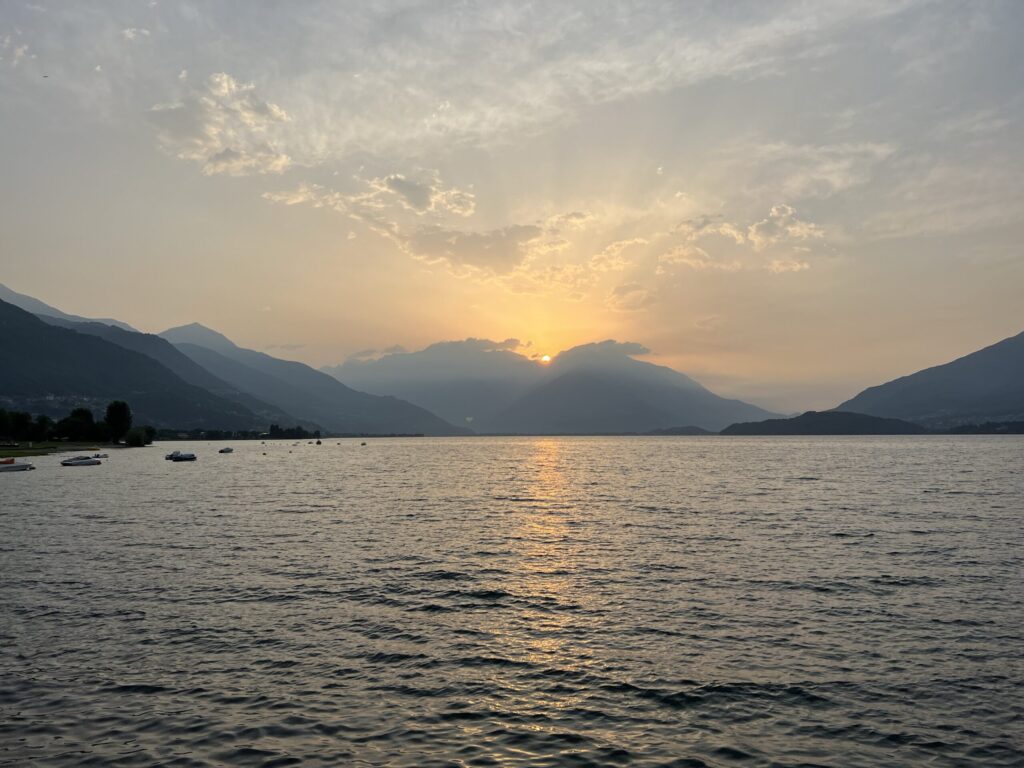
After a long flight from Bangkok to Milan, we headed out in a rental car to Lake Como. We rented a place with a view up at the north end of the lake. It was in a smallish village with shockingly few tourists and amazingly good gelato. We stayed for a couple of weeks, giving us time to head down to the better-known villages of Bellagio and Como—which are packed with tourists. While we enjoyed our time in Italy, I have to say that we would’ve had an entirely different experience if we had stayed in one of those more well-known towns. Como in the summer is a hot, crowded, sticky mosh pit of tourism.
We'd hoped for cool-ish weather, and it was definitely cooler than the southern parts of Italy, but there was a heat wave, so we were glad to have air conditioning. We'd been warned to be careful with the AC because it would cost extra, but we were thrilled when the extra charge totaled about €30. Lake Como is a great place to visit, but it's probably not the best place for avoiding the heat.
Austria
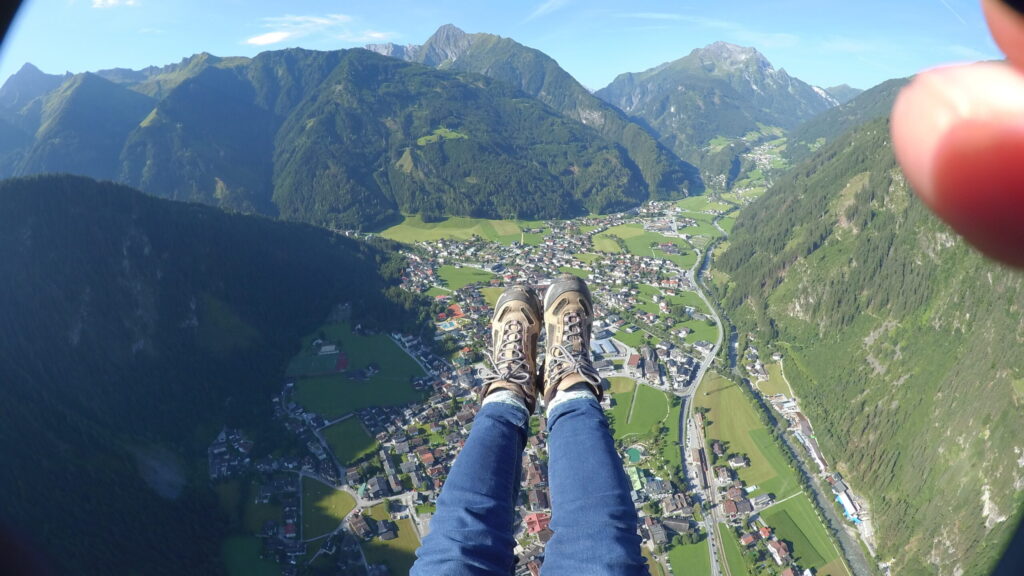
Heat avoidance is, however, a specialty of the Austrian Alps. We'd stayed in the same apartment two years earlier, so we knew the area and the climate. If it ever threatened to get hot in the valley of Mayrhofen, all we had to do was jump in a gondola and go up 8,000 feet, put on our jackets, and enjoy lunch in one of the mountaintop restaurants.
Two friends visited us during the month we spent in Austria. Having friends visit is a special thrill for us. Full-time travel complicates relationships. Meeting up on the road and spending a few days together is a great way to enjoy old friends and keep the relationships alive.
Turkey
After longer stays in Italy and Austria, we were ready for a bit of variety, and Turkey delivered.
We spent a week in Kaş, a charming fishing village on the Mediterranean. Kaş is one of the places we visited in 2015 when we first started our journey as digital nomads. We loved it then, but as the author Thomas Wolfe said, "you can't go home again." Things have changed in Kaş, and while we enjoyed our second visit, the magic of our first visit wasn't quite there. We had changed. I'm sure Kaş is magical for many of the folks we saw enjoying their holidays there, but we were ready to move on when our eight nights were over.
We hopped in our tiny rental car and headed to Konya, a city we had never visited. Aside from Kaş and Istanbul, we hadn't explored much of Turkey. Konya surprised us with its fascinating blend of history and modern economic growth. We spent a few days exploring the city's rich heritage, including the Mausoleum of Rumi, and soaking in the local culture.
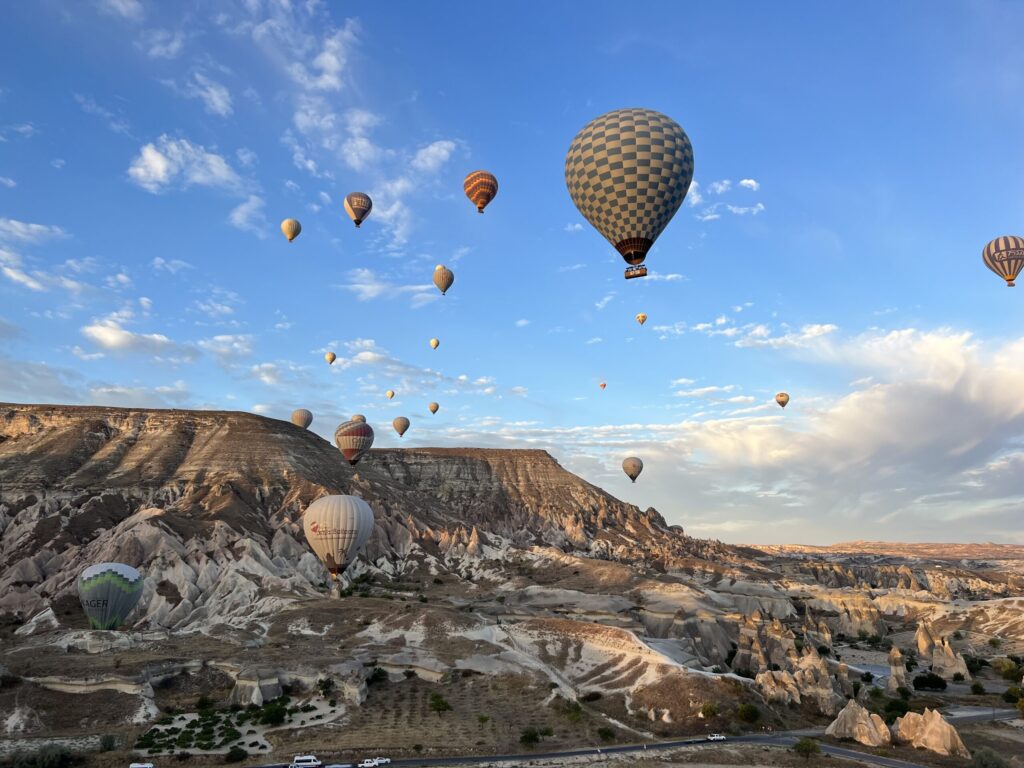
From Konya, we drove to the incredibly touristy but undeniably beautiful region of Cappadocia. Famous for its unique rock formations, known as fairy chimneys, Cappadocia is a place that warrants its popularity. We rode a hot-air balloon above the stunning landscape, enjoying a bird's-eye view of the spires and valleys below, and hiked through the ancient cave dwellings that dot the area. Some places are touristy for good reason, and Cappadocia is one of them.
Our journey continued with a flight to Izmir, where we spent five days exploring the city. Izmir's vibrant waterfront and rich history provided a perfect backdrop for exploring the ruins and enjoying the local food.
Finally, we took a short flight to Istanbul, one of our favorite cities. A couple of friends from the US visited us there, and it's always a pleasure to show off a city we love. We ate a lot of outstanding Turkish food and rode a boat on the Bosphorus and wandered the city, soaking up the vibe at the intersection of ancient and modern.
United States
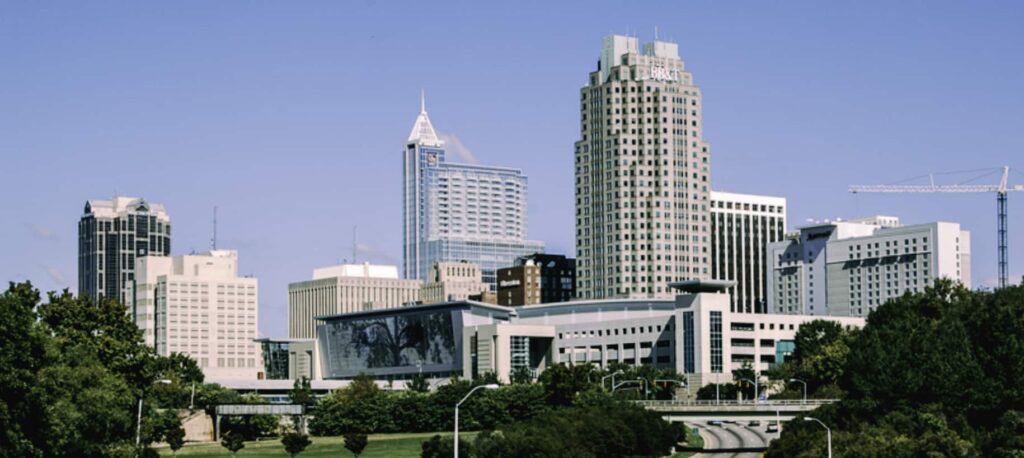
Next on our itinerary was the United States. We spend about two weeks a year there, primarily for medical check-ups and family visits. We always have a great time, and it's endlessly fascinating to see how much Raleigh, the city we used to live in, changes from year to year.
The downtown neighborhood where we lived for our final three years, looks almost unrecognizable compared to when we left nine years ago. The transformation is dramatic, with new buildings, restaurants, and stores popping up everywhere. It feels like a different place, and seeing how much it has evolved is both exciting and surreal.
During our visit, we run around like crazy, trying to see everyone and catch up. It's a whirlwind of activity, but we love the opportunity to reconnect with friends and family. However, we also cherish it when folks visit us on the road. Those visits allow for more quality time together without the rush and distractions of our brief stays in Raleigh.
Returning to our former home city often feels a bit strange - like we're tourists in a place that used to be so familiar.
Each visit to Raleigh ends with us feeling a little less connected to it. It reminds us how much our lives have changed—how much we have changed—and how our sense of belonging has evolved. Despite this, our time in the United States is always meaningful, filled with love, laughter, and a sense of connection, even as it underscores our nomadic existence.
Mexico
After leaving the US, we headed straight for Mexico City. We made the same journey last year and were eager to return. There were two main reasons for this choice: first, the food. Mexican cuisine is simply unbeatable, and Mexico City offers the best of it. Realistically, you can’t get genuinely authentic Mexican food outside of Mexico.
The second reason is the travel logistics. Mexico City has been a fantastic hub for finding bargain fares out of North America. In 2022, we snagged great business-class deals to Europe, and we were lucky to be able to do the same in 2023. Unfortunately, those deals now seem to be getting harder to find.
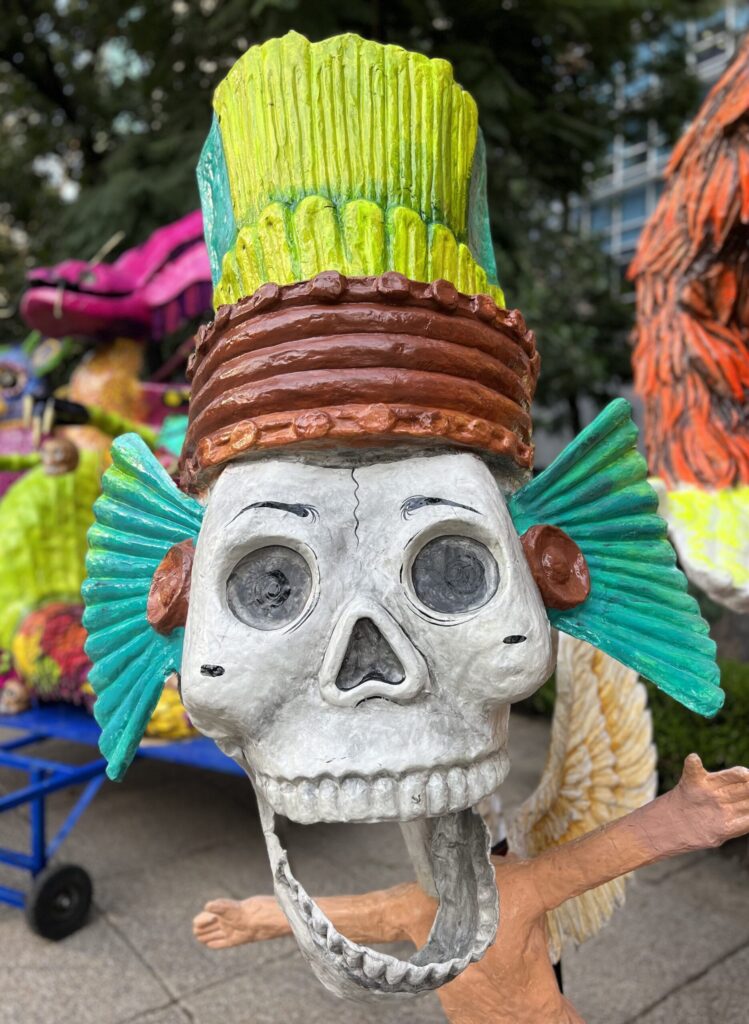
We’re huge fans of Mexico City, and our visits have coincided with the Day of the Dead celebrations for the past two years. This vibrant festival is endlessly entertaining, with its parades, costumes, elaborate exhibitions, and lively street performances.
Mexico City never ceases to amaze us. Its deep history, bustling markets, and diverse neighborhoods offer endless opportunities for exploration. Whether strolling through the historic center, visiting the Frida Kahlo Museum, or simply people-watching in one of its many plazas, the city always has something interesting to offer. It combines the best of tradition and modernity, making it a perfect stop in our travel itinerary.
Spain
We flew from one Spanish-speaking country, Mexico, to another, Spain. We arrived in November, which I had assumed would be a bit late in the year and quite cold, but it was actually the perfect time to visit. The weather was pleasantly mild, making our meanderings comfortable and enjoyable.
We started our journey in Granada, a city steeped in history and known for the stunning Alhambra Palace. We spent our days exploring the intricate Moorish architecture and the beautiful Generalife gardens.
Next, continuing the theme of ancient Moorish architecture, we traveled to Córdoba, home to the magnificent Mezquita, a mosque-cathedral that exemplifies the blend of Islamic and Christian architecture. The historic center of Córdoba is a UNESCO World Heritage site, and we thoroughly enjoyed getting lost in its maze of cobbled streets.
From Córdoba, we headed to Seville, a city that captivated us with its vibrant culture and stunning landmarks. The Plaza de España, with beautiful tile work and grand architecture, was a highlight. We also enjoyed wandering through the historic Santa Cruz neighborhood and visiting the impressive Seville Cathedral.
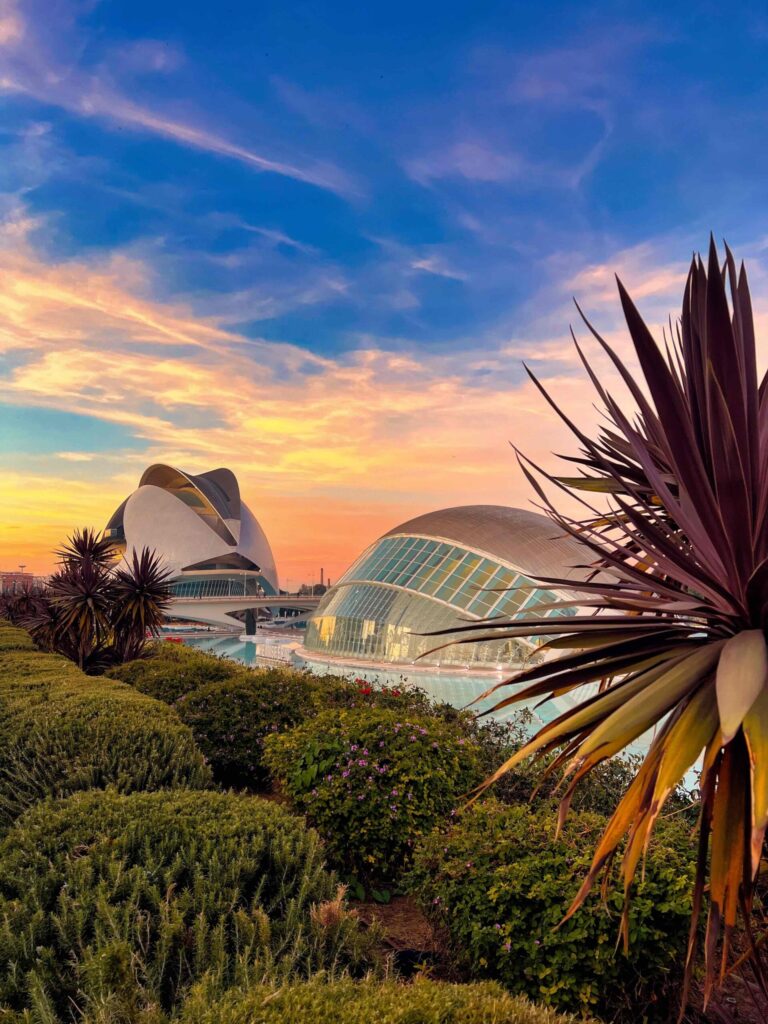
Our final stop was Valencia, a seaside city that we had visited once before, on a cruise, and had always wanted to explore further. The futuristic City of Arts and Sciences provides a delightful contrast to the historic charm of the medieval center.
This visit allowed us to see a different side of Spain, beyond the bigger cities of Madrid and Barcelona. The historic sites, the delectable food, and the charm of wandering through lesser-known streets made for a memorable experience. Spain in November was a revelation, and we’re already contemplating where we’ll go on our next visit.
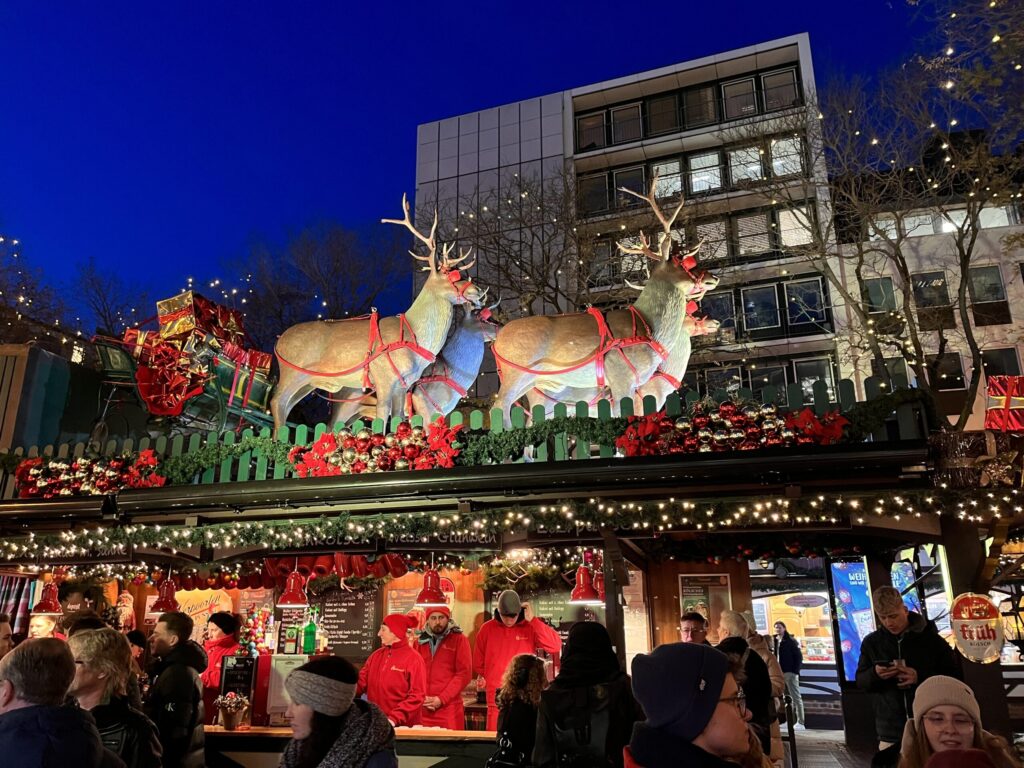
Germany
The next country on our list was Germany. Lisa had always wanted to go to the Christmas markets, but I had vetoed them for years because I wasn’t keen on being cold. And yes, it is cold during the Christmas markets. I had put it off as long as possible, but eventually I ran out of excuses, so we headed to Germany.
Our first stop was Cologne, where the Christmas market was … as cold as I expected. It was definitely festive, with twinkling lights, beautifully decorated stalls, and the enticing aroma of mulled wine and gingerbread filling the air, but it was also definitely cold.
Next, we visited Düsseldorf, which has a multitude of Christmas markets. We strolled through many of them, sipping hot chocolate and snacking on massive hot cheesy pretzels. It was cold, but fun.
Our final stop was Frankfurt, where we explored another charming Christmas market. The festive foods, beautiful decorations, and lively atmosphere made each market visit special. It was fun and interesting to see the different touches each city brought to their celebrations.
However, I have to admit: I wouldn’t necessarily do it again. It is, in fact, really cold. You spend most of your time outside, standing while you eat. The idea is to socialize and drink a lot of alcohol, which theoretically keeps you warm while you shop for Christmas decorations and gifts. But have I mentioned the cold? I’m not saying I didn’t enjoy it, but I probably won’t volunteer to do it again anytime soon. Once was enough to satisfy both my curiosity and Lisa’s long-standing wish.
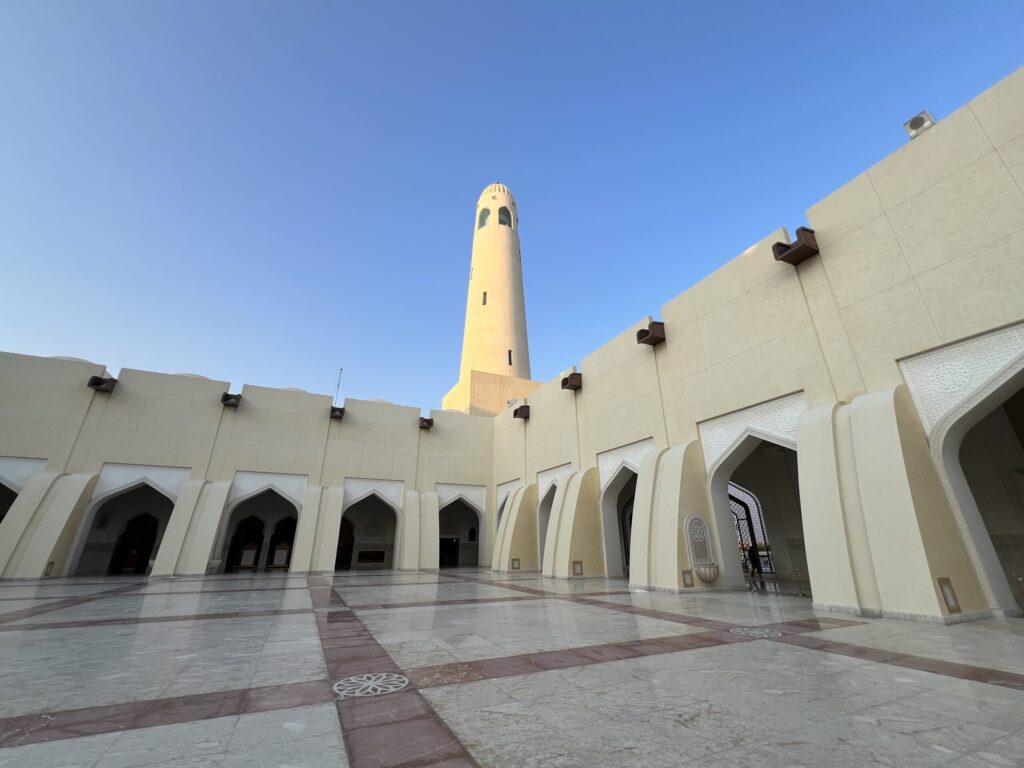
Qatar
A shocking number of our destinations are the places where we'd have to change planes anyway. That's how Qatar ended up on our itinerary. Previously, we had only passed through the Doha airport during layovers. This time, we decided to check into a hotel and stay for five nights, which turned out to be a fantastic decision.
Qatar impressed us with its stunning modern architecture and amazing food, particularly at a Syrian restaurant we discovered. The culinary scene in Doha offers everything from traditional Middle Eastern dishes to international cuisine.
The people were hospitable and friendly, and we often saw them outside at night, chatting while their kids played nearby. The sense of community and the nightly social gatherings added a warm and welcoming vibe to the city.
Doha is affluent and modern, with magnificent hotels that are a testament to the city’s wealth. We were pleasantly surprised by how affordable the accommodations were, likely due to the many rooms built for the World Cup. This made our stay not only comfortable, but also a great bargain.
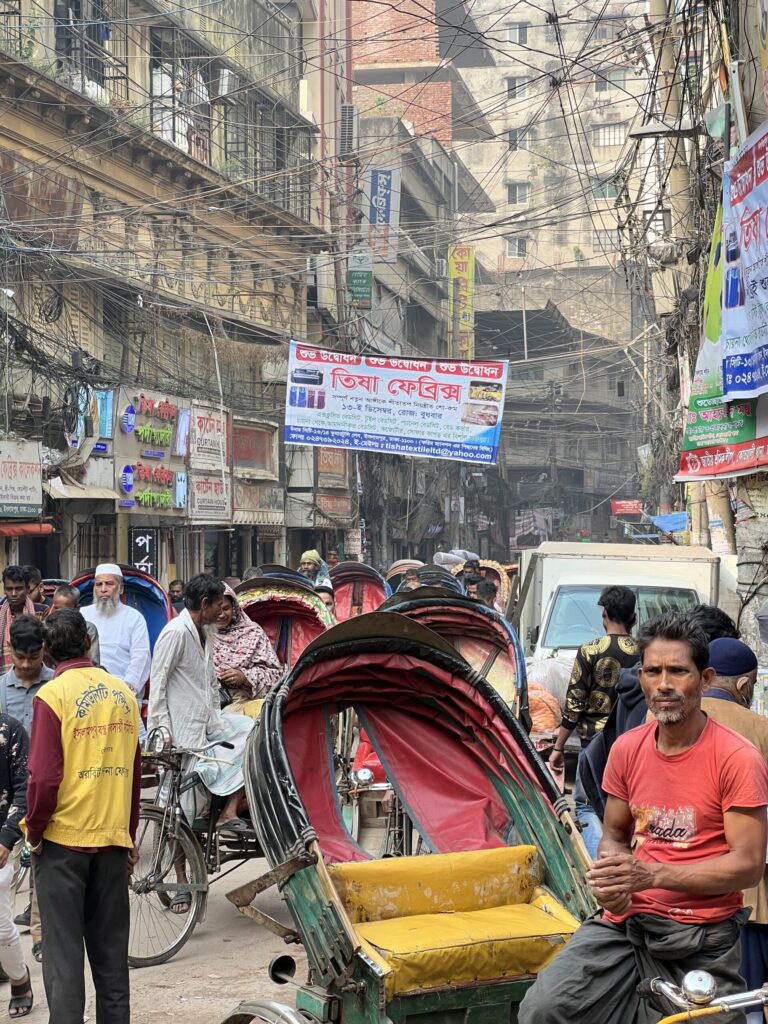
Bangladesh
Why Dhaka? I’ve been aware of Bangladesh since I was a little kid. I remember the Concert for Bangladesh; my parents had the album. I’m unsure how the country first got on my radar, but it did. Over my lifetime, I’ve seen hundreds of pictures of people packed on top of trains—always in Bangladesh.
Years ago, we met a guy from Dhaka at a roadside rest stop. We spent 10 minutes chatting and became Facebook friends. He kept the country on our minds.
Since we were going to be in the neighborhood, we had to drop by. We knew it was a poor and densely populated country, and I’ll admit we insulated ourselves from that to some extent. We flew business class from Qatar and stayed in a suite at a beautiful Marriott. We hired a guide for a day to show us around the city. The population density had me a little nervous.
I shouldn’t have been. Yes, it’s crowded, poor, and intense, but the people are incredibly nice on a level we could not have even imagined. They are welcoming, sincere, curious, and interesting. We were surprised and delighted by their warmth and hospitality. But it truly is intense. Leaving the country five days later and navigating our way to the plane was another hectic experience. Nothing about life in Dhaka is easy.
Despite the challenges, our time in Dhaka was eye-opening and memorable. The city’s street life, chaotic markets, and friendly people left a lasting impression on us. We visited historical sites like the Lalbagh Fort and the Ahsan Manzil, which offered glimpses into Bangladesh’s rich history and culture.
We were deeply touched by the kindness of the people we met, from our guide who showed us around with pride, to the locals who wanted loads of photos with us. They were legitimately some of the nicest people we’ve ever met, and that’s really saying something.
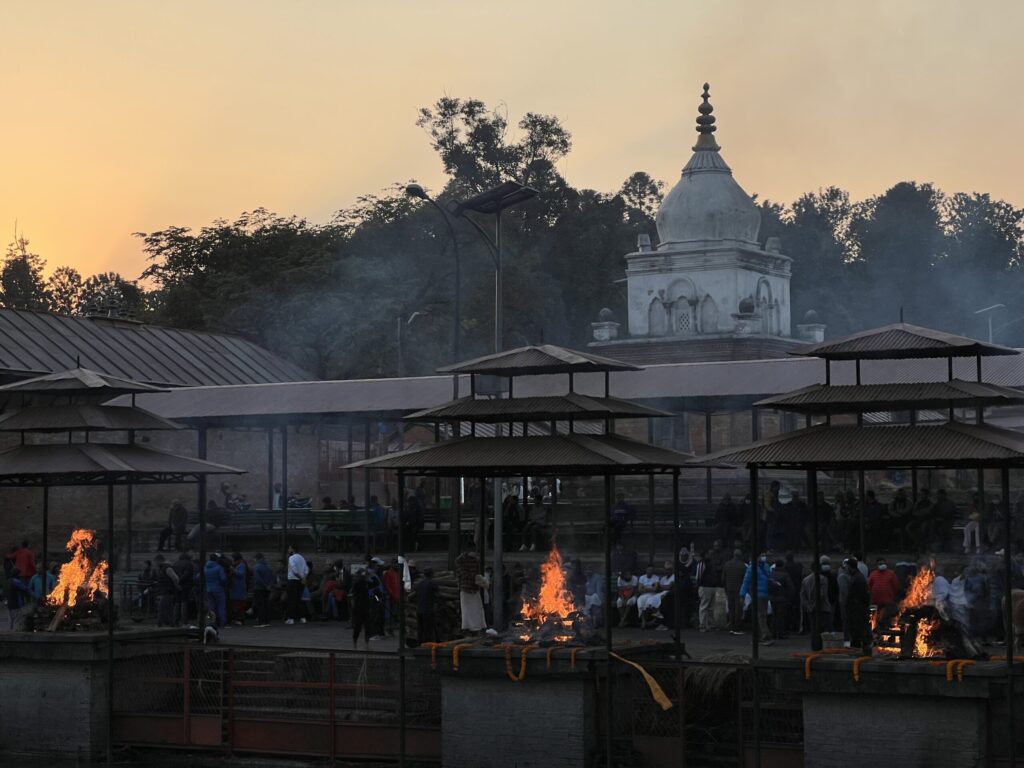
Nepal
The next country on our list was Nepal, where we spent time in the small mountain town of Pokhara and the bustling capital of Kathmandu. We needed somewhere to be for Christmas, so we booked well in advance. It can be tricky to secure accommodations over the Christmas and New Year’s holidays because places fill up quickly. Fortunately, we found a nice Hyatt in Kathmandu and booked it for two weeks over Christmas.
We spent a week in Pokhara, taking advantage of easy access to some ‘baby’ hikes. Nestled in the mountains, Pokhara is a gateway town for trekking in the Annapurna range, but we just wanted some short day hikes. Even those challenged our fitness.
One of the highlights of our stay in Pokhara was waking up early to watch the sunrise over the Himalayas. The sight of the sun illuminating the snow-capped peaks was nothing short of magical.
Kathmandu reminds us a lot of India, and it’s easy to see why. Nepal was once part of India, and the similarities are striking. The city is busy, crowded, and densely populated, with a vibrant street life that’s both chaotic and fascinating. What makes Kathmandu particularly interesting is its diversity. Situated between India and China, the two most populous countries in the world, Nepal has become a unique intersection of cultures. This blend is evident in the religions, languages, and traditions of the people we encountered.
We explored the rich cultural heritage in Kathmandu, visiting ancient temples and ritual sites that are still the heartbeat of the city. The local cuisine was another highlight, with momos (Nepalese dumplings) becoming a quick favorite.
India
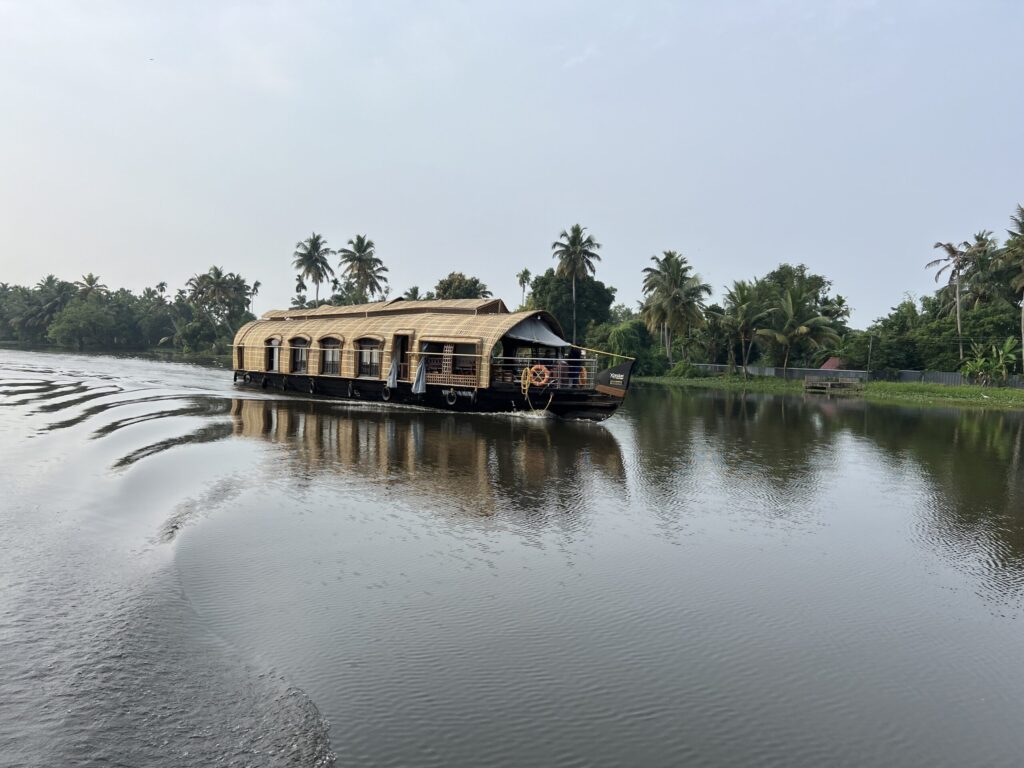
From Nepal, we flew down to southern India, eager to explore a new region of this incredibly varied country. Our adventure began with a couple of nights on a houseboat in the backwaters of Kerala. This relaxing and beautiful experience was entirely different from our previous visits to the bustling cities of Mumbai and Delhi, and the historic Rajasthan area. The backwaters were less densely populated, and to our surprise, beef was available on many menus, a rarity in most parts of India.
After our serene houseboat experience, we hired a car and driver to spend about ten days traveling across the region. We left the backwaters and embarked on a road trip that took us through some of the most picturesque parts of southern India. Our first stop was Munnar, a hill station famous for its tea plantations and stunning landscapes. The rolling hills covered in lush green tea bushes were a sight to behold. We spent a couple of days in Munnar, exploring the tea estates.
Next, we traveled to Kodaikanal, another beautiful hill station known for its mist-covered cliffs and serene lakes. The crisp mountain air and breathtaking scenery tempted us into a glamping situation, which was as close to camping as we've been in a long time.
Continuing our roadtrip, we headed to Chettinadu and then Madurai, where we had the opportunity to witness the Pongal festival up close. The local villages were transformed with colorful decorations and festivities. It was fascinating to see the cultural traditions come to life and to be part of the community’s celebrations, even as outsiders.
This part of India offered a very different experience than the more touristy areas we had visited before. The pace was slower, the people were incredibly welcoming, and the landscapes were some of the most beautiful we had seen. This journey through southern India provided a new perspective on the country. It was a mix of relaxation and adventure, culture and nature, and it gave us a deeper appreciation of India’s size and diversity.
Maldives
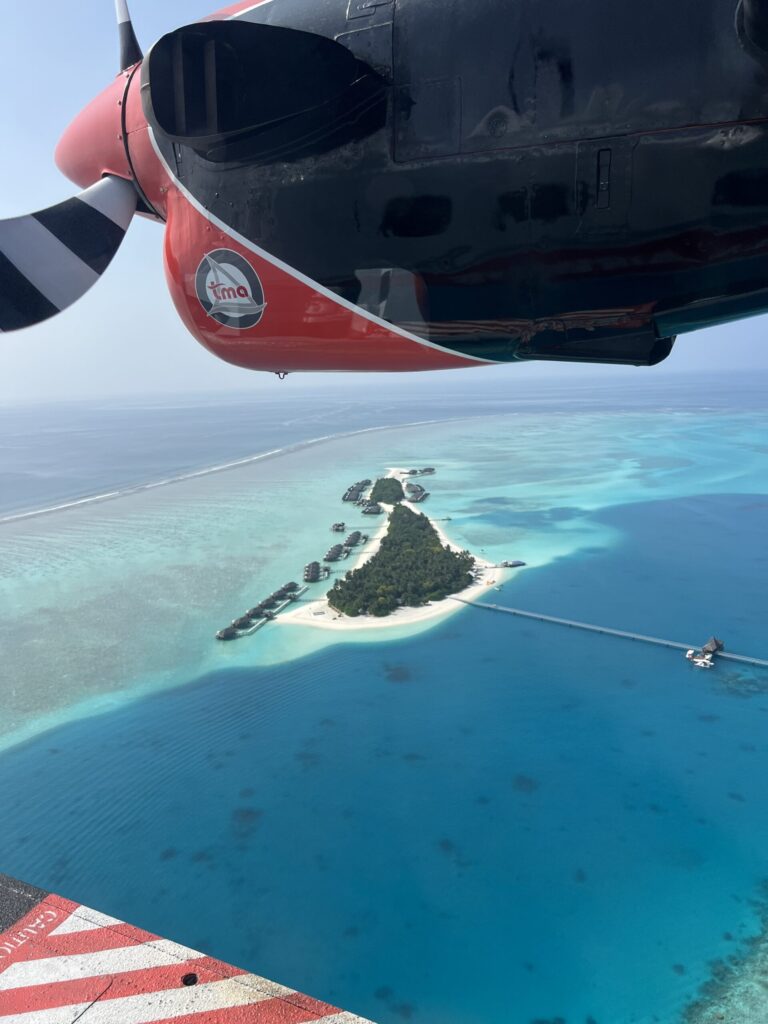
Anticipating that two months spent in Bangladesh, Nepal, and India would be a lot to take in, we knew we’d need a break, and the Maldives were the perfect respite. Flying there from India was a great plan, and we really did have a relaxing time. We stayed in an overwater villa at one of those fancy resorts and I must say, it was absolutely beautiful. The Maldives are as beautiful, if not more so, than all the pictures you’ve seen.
Is it worth flying halfway around the world? Probably not, but it was just a two-hour flight for us, making it very convenient. We also found a good deal on the resort, so it all worked well. However, there is a weird isolation being on a private island where the resort is the only thing there. There’s nowhere to go except for the activities and amenities provided by the resort, which can feel a bit confining.
Despite this, I’m glad we did it. The seaplane ride was nice, offering stunning views of the turquoise waters and coral atolls. The beauty of the Maldives, with crystal-clear waters, vibrant marine life, and pristine white-sand beaches, is undeniable. I’ve never seen so many shades of blue.
The resort experience, however, comes with a hefty price tag. We managed to avoid spending an incredible amount of money, but some of the prices were beyond belief—$200-$800 for dinner and activities costing over $1,000 per person. It’s just a very expensive place to vacation.
In the end, while the Maldives is stunning and offers a unique experience, I’m not sure I would fly halfway across the world to get there when there are so many other great beaches around the globe.
Egypt
Next up was Egypt, a country we’ve visited multiple times and always enjoy. On this trip, we spent a couple of weeks moving quickly, starting in the far south and making our way north, up the Nile.
Our journey began in Abu Simbel, a breathtaking site with massive rock temples built by Ramses II. The grandeur and scale of these monuments set the tone for the rest of our stay. From Abu Simbel, we took a car to Aswan, a city that offered equally impressive historical sites. The Philae Temple was the highlight.
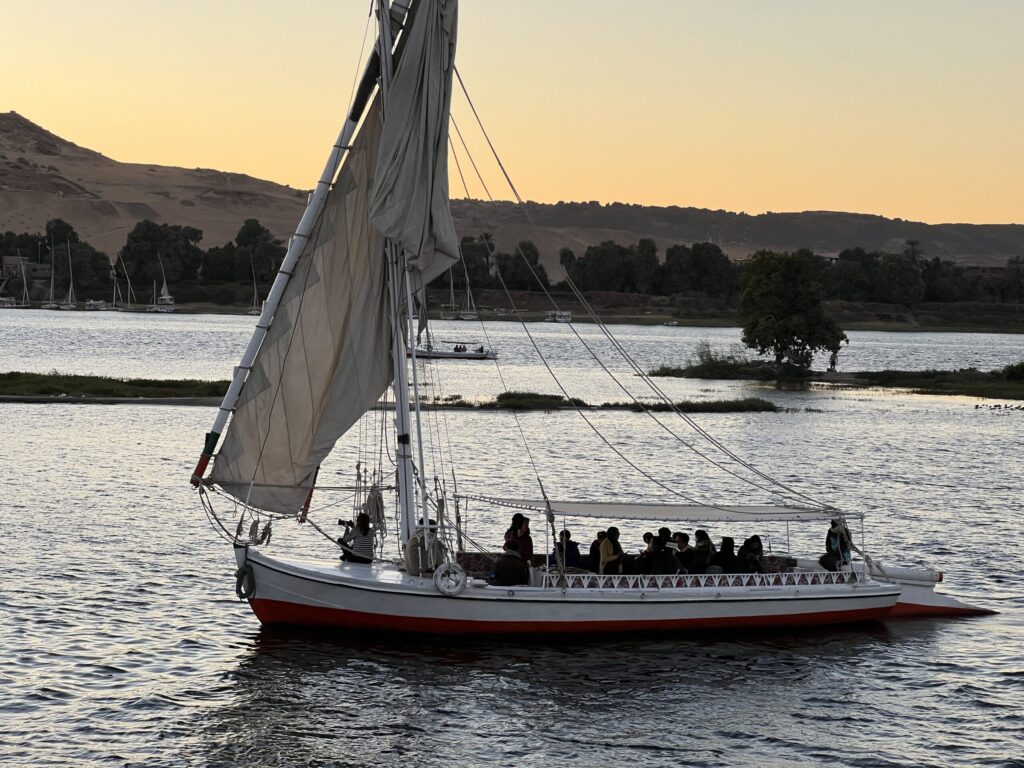
In Aswan, we boarded a Nile cruise that took us to Luxor. Being on the Nile, rather than next to it, was a different way to experience this famous river, giving us a different perspective on life in rural Egypt. And Luxor is hard to beat: Karnak Temple and the Valleys of the Kings and Queens were all worth the repeat visit.
After the cruise, we flew to Cairo and spent about a week there. Cairo, with its chaotic streets and bustling markets, was a fitting conclusion to our trip. The city’s energy is both invigorating and exhausting; the never-ending stream of vendors peddling their wares just add to the intensity. However, the historical sites, like the Pyramids of Giza, make it worth doing.
We are always happy to be in Cairo and equally happy when it’s time to leave, knowing that we’ll likely return when we're geared up for another Cairo experience.
Kuwait
The phrase ‘culture shock’ doesn’t entirely convey the experience of arriving in Kuwait City from Egypt. We left our hotel in Giza, on the outskirts of Cairo; a taxi drove us down a 10-lane highway jammed with battered cars flying along at high speed. Horns were honking, drivers were swerving, and the highway was lined with people waiting for buses that simply stopped in the right-hand lane.
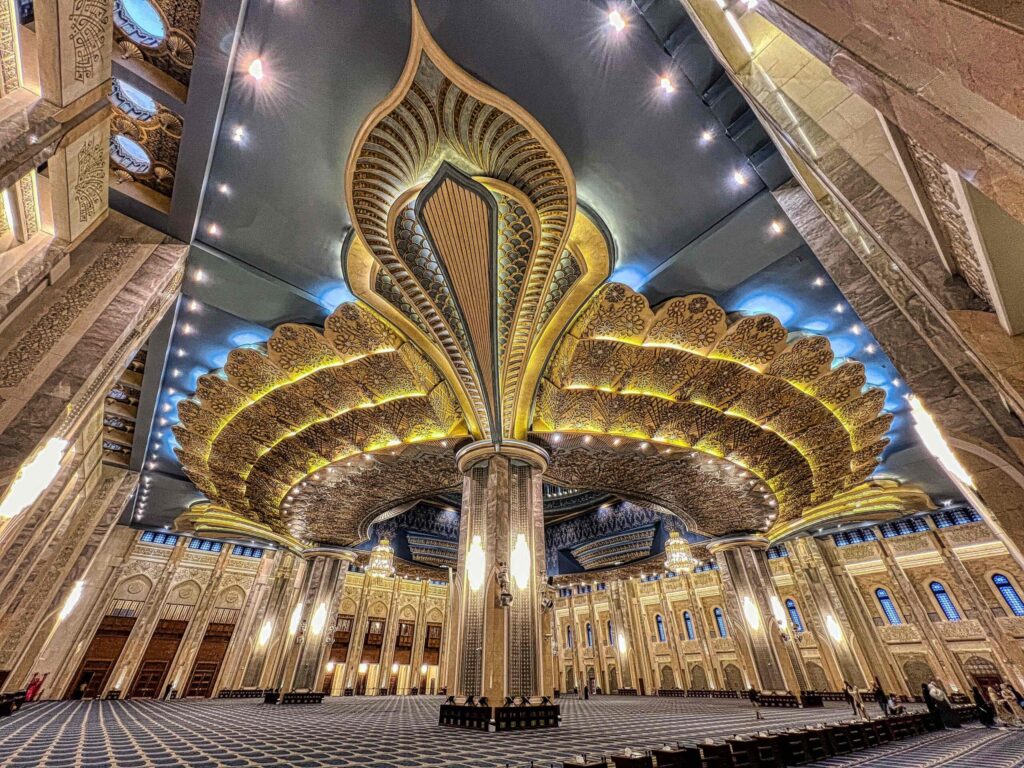
We rushed through the chaotic Cairo airport, boarded a plane, and just two hours later landed in Kuwait City, which could not have been more different. The city is clean, orderly, organized, and nearly perfect in its appearance.
Kuwait City exudes wealth. Our hotel was filled with Swiss bankers catering to wealthy, oil-rich Kuwaitis. The stores were filled with luxury goods, and even the Cheesecake Factory at the mall was beautifully upscale. The city’s affluence was evident everywhere we looked.
Kuwait City’s order and cleanliness were a refreshing change after the intense experience of Cairo. It was a place where everything seemed to work seamlessly, and the complete difference in atmosphere was both striking and soothing. The city's impressive infrastructure and high standard of living were evident in every aspect of daily life, making it a fascinating place to explore and experience.
Our three-day visit to Kuwait City was too short to be restful. But we still needed a little downtime before we headed down to Africa. It was time to slow down.
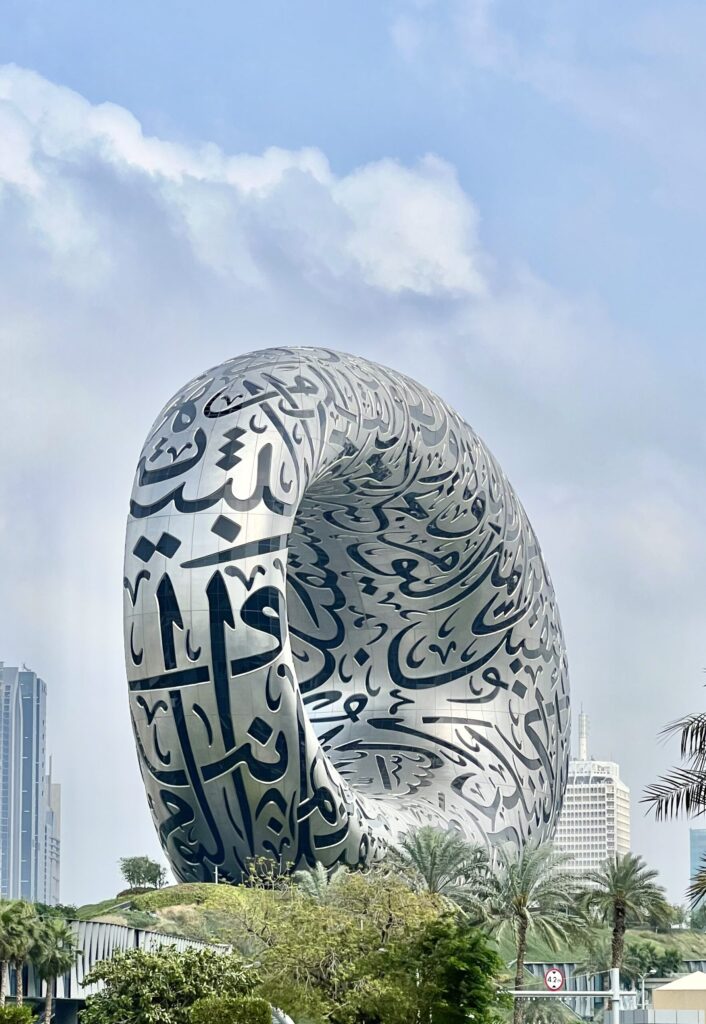
United Arab Emirates
Fast travel is exhausting. I’m not complaining—it’s a great problem to have and easily solved with a bit of downtime. But the constant moving, activities, touristing, and stimulation add up quickly. We needed a break, and Dubai was the perfect place for that. We restocked stuff we needed like deodorant and sneakers, visited doctors and dentists, and enjoyed some fantastic hummus.
Dubai is a great place to rest and recharge. With every type of hotel and cuisine available, great places for long walks, and fascinating people-watching opportunities, the city has it all. You can have anything delivered, making it perfect for just sitting back and watching the world go by while recharging your batteries.
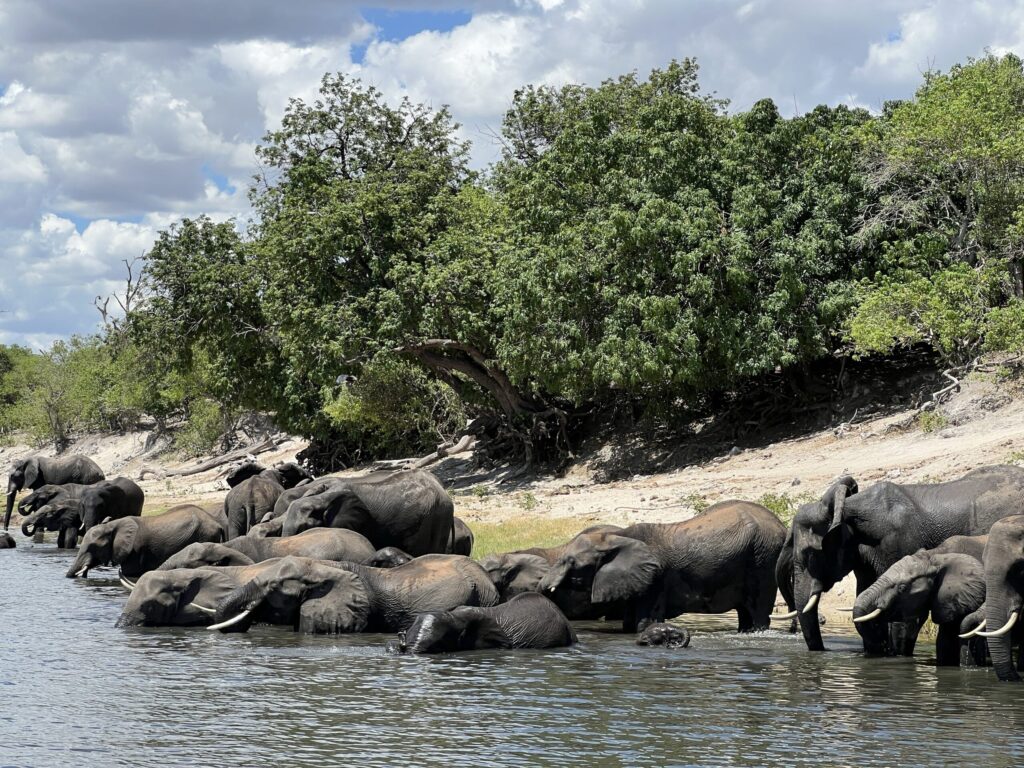
Kenya, Zambia, Botswana, Zimbabwe, Ethiopia, Seychelles
After chilling out in Dubai, we were ready to get moving, and that's exactly what we did for a bit over a month as we explored parts of Africa.
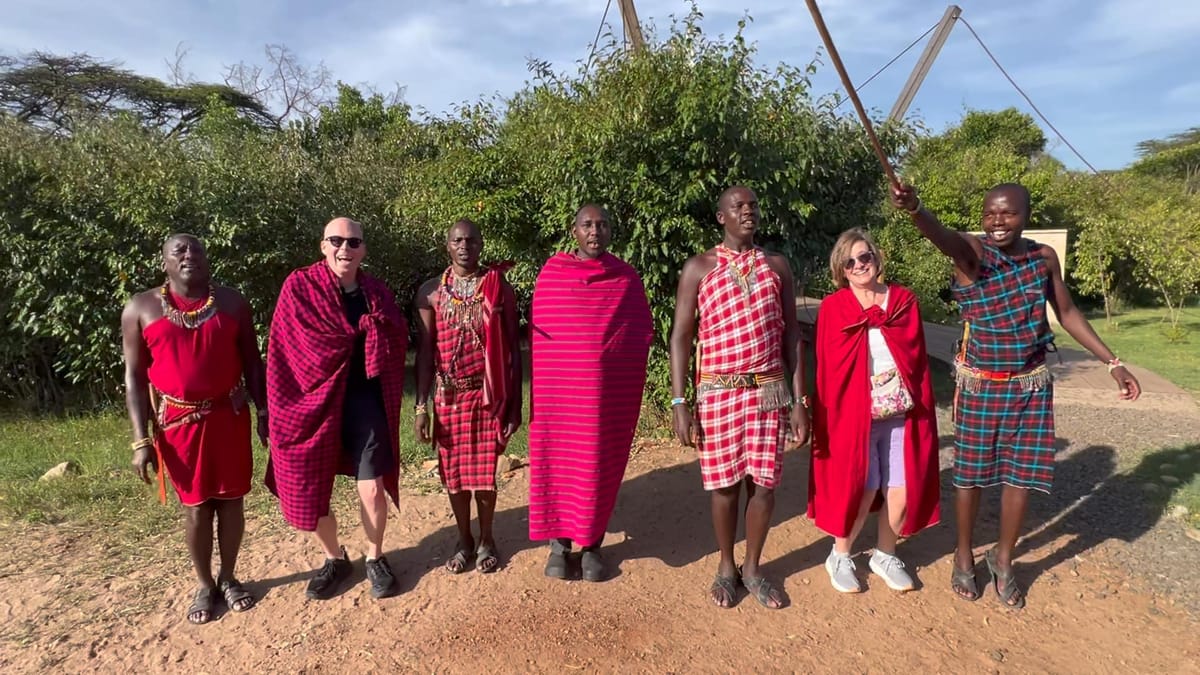
In Kenya, we spent a few days in Nairobi, where we found some fantastic food, before heading out into the bush for a Masai Mara visit. Seeing elephants, lions, giraffes, Cape buffalo, and more in their natural habitat was incredible. We'd seen most of these animals before, but experiencing them from a luxury resort within a national park jam-packed with wildlife made it even more special.
Next, we headed to Victoria Falls, and it's impossible not to be impressed by the sheer power and beauty of the water. Wow! We had a fantastic time exploring the area, soaking in the awe-inspiring views before moving on to Botswana for more wildlife adventures. Chobe National Park offered a unique experience as we toured the animal habitats by boat rather than safari trucks. The smooth ride made for an awesome way to visit and see even more animals, especially elephants and hippos, up close.
After our fill of animal adventures, we were ready to hit the beach but realized we’d have to change planes in Addis Ababa, Ethiopia. We decided to turn our layover into a longer visit to enjoy some delicious Ethiopian meals. We’ve loved Ethiopian food for decades, and it's never better than it is in Addis. Satisfied and stuffed, we flew off to the Seychelles.
The Seychelles, even in rainy season, was a great place to relax, unwind, and catch up on work. We explored the main island, enjoyed the spectacular scenery, and watched storms roll in over the ocean. It was the ideal end to a whirlwind African adventure.
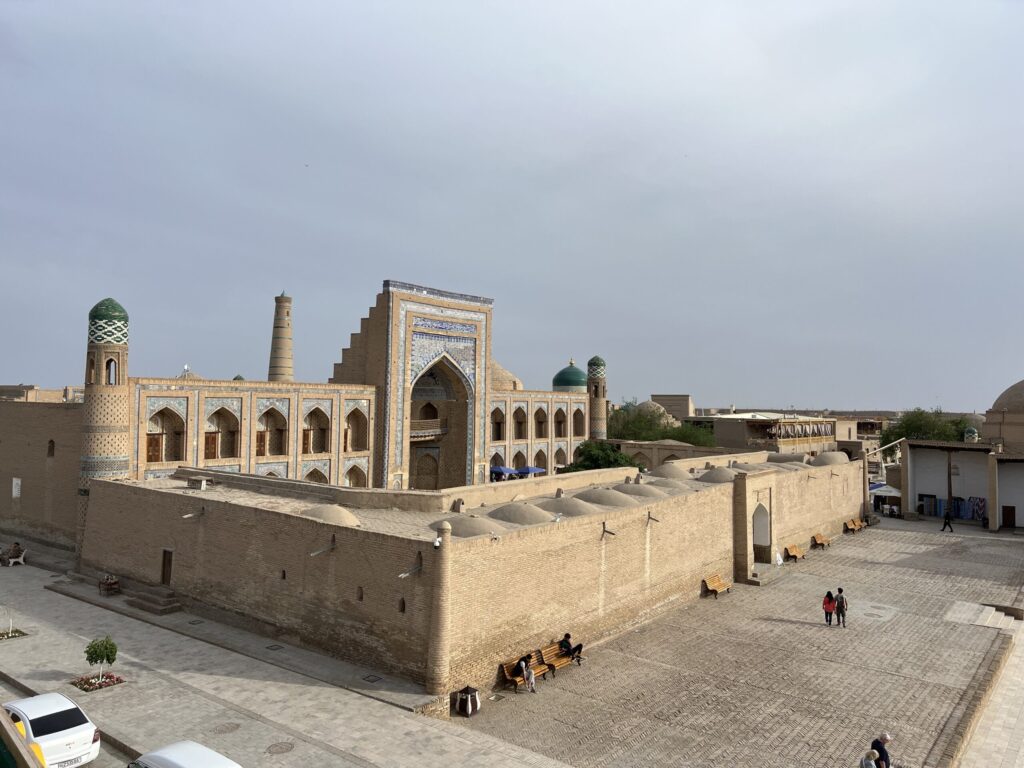
Uzbekistan
Next on our journey was Uzbekistan. We flew from the Seychelles, which made for an awkward transition since flights to Uzbekistan tend to land in the middle of the night. We had a 9-hour layover in Dubai, which added to the travel complexity. We made the most of our layover by visiting one of our favorite restaurants in Dubai. It’s owned by three Syrian brothers. Despite Syria's troubles, it has produced some amazing chefs.
We finally arrived in Tashkent at four in the morning, only to find that our hotel had forgotten to send a car to pick us up. This turned out to be a blessing in disguise, as it introduced us to just how inexpensive Uzbekistan is. The hotel had previously offered to drive us from the airport for $45, but our impromptu airport taxi cost only $7. This was the beginning of many taxi rides in Uzbekistan, each costing as little as $2 for a half-hour ride.
Uzbekistan is off the beaten path, although it was highlighted in The New York Times "52 Places to Visit" in 2019, just before COVID. Despite the country not receiving a huge number of tourists, the ones who do visit are treated incredibly well. We found that hotel staff in each place we visited spoke excellent English and offered all sorts of guidance and help. The country has a well-worn tourist route that makes it an organized, orderly, and easy place to visit.
We started in Tashkent, where we wandered around the markets and explored the subway stations, which were built during the Soviet era. From Tashkent, we traveled to the ancient Silk Road cities of Samarkand, Bukhara, and Khiva, seeing all the historical buildings and beautiful tile work and meeting incredibly pleasant and friendly people.
The food was much better than we expected, although it was a bit challenging for Lisa, who is a vegetarian. Nonetheless, we enjoyed fascinating sights and appreciated the rich history.
Tashkent impressed us with its modernity and infrastructure, making it an attractive spot for digital nomads. However, Khiva was probably the most interesting and fun city to hang out in, with its well-organized UNESCO-protected tourist center that felt almost like a theme park. It was incredibly easy to visit, with a lot to offer in terms of historical and cultural experiences.
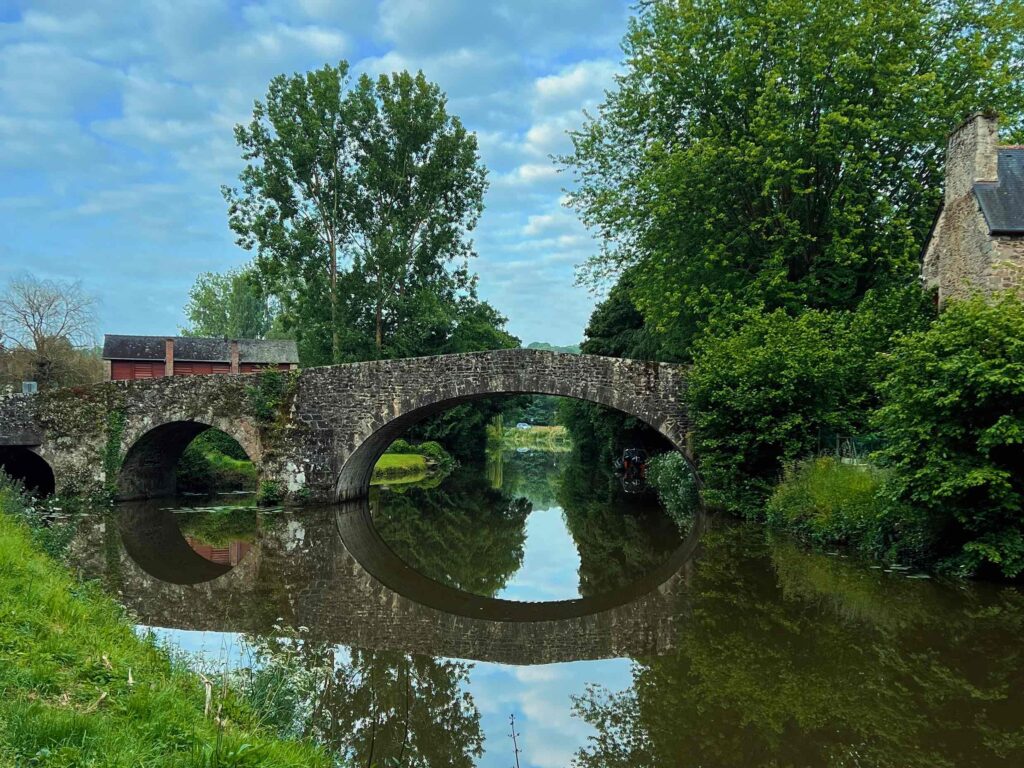
France
As I write this, we are in France. Our French adventure began with a week in Paris, where we hung out with the same American friends who visited us in Istanbul late last year. It was wonderful to reconnect and explore the city together. One of the highlights of Paris, for us, is always the pastry and chocolate. Lisa, being somewhat of an expert on both, ensures we spend a lot of time sampling these delights—for research purposes only, of course. We're just doing our part to contribute!
After our friends left, we traveled to the south of France and spent a month in Sanary-sur-Mer in Provence on the coast. We chose this town because it won an award for having the best market in France, and it certainly lived up to its reputation. The scenery was beautiful, the food was delicious, and the market was fantastic. Being there for a month gave us time to slow down and get some work done. This marks the beginning of our plan to slow our pace a bit, shifting to longer stays in fewer places.
From the south, we traveled to a small town called Dinan in Brittany, where we are now. Seeing these smaller villages gives us a different perspective on the country than we might have had if our only experience was Paris. Dinan, with its medieval charm, cobblestone streets, and historic buildings, has been a delightful place to explore. It's a different experience from the hustle and bustle of Paris, offering a very different view of French life.
France has been a great landing spot from a busy year. We look forward to continuing this slower approach for a while longer.
Moving forward
Looking ahead, we plan to continue our journey at a slightly slower pace, taking more time to immerse in each destination. The past year has reminded us of the value of balancing fast travel with periods of deeper exploration and relaxation.
We are planning to leave France soon, and unless things change, the next 12 months will take us to the Faroe Islands, Denmark, Azerbaijan, Kazakhstan, Armenia, UAE, China, Thailand, Indonesia, Singapore, Cambodia, Bhutan, Norway, the Netherlands, and Cyprus. While we aim to slow the pace a bit, curiosity and wanderlust inevitably tempt us to keep moving, exploring, learning, and growing.
If you’re curious to find out where we end up without waiting for my annual update, check out our continuously updated itinerary and subscribe to Lisa’s newsletter. She’ll keep you in the loop. In the meantime, we’d love to hear from you about travel ideas and are always happy to meet up along the way.
Our journey continues, and we look forward to sharing more adventures with you. Thank you for following along and being a part of our travel story. Safe travels and see you on the road!
This Series
- 11 Years as a Digital Nomad Lawyer
- 2025 - Ten Years. Still Making It Up. Still Not Going Back.
- 2024 - The Last Cheap Year. We Didn't Waste It.
- 2023 - Eight Years In, We Finally Went Back to Hong Kong and Didn't Fight
- 2022 - Derek Healed. We Picked Up the Pace. The Doors Kept Opening.
- 2021 - We Survived on Covid Tests, Business Class, and Luck
- 2020 - Control Was Always an Illusion. Covid Just Made It Obvious.
- 2019 - After Four Years, Our Biggest Stressor Is Being on Time
- 2018 - Somewhere Along the Way, I Started Feeling at Home
- 2017 - The Gear Doesn't Matter. The Goodbyes Do.
- 2016 - One Year In, and It's Mostly a Blast