If You Can’t Pay, You Don’t Fly
A helicopter off the Everest trail can cost $10,000 before breakfast, and it won’t take off until someone pays. What your policy has to say before you go.
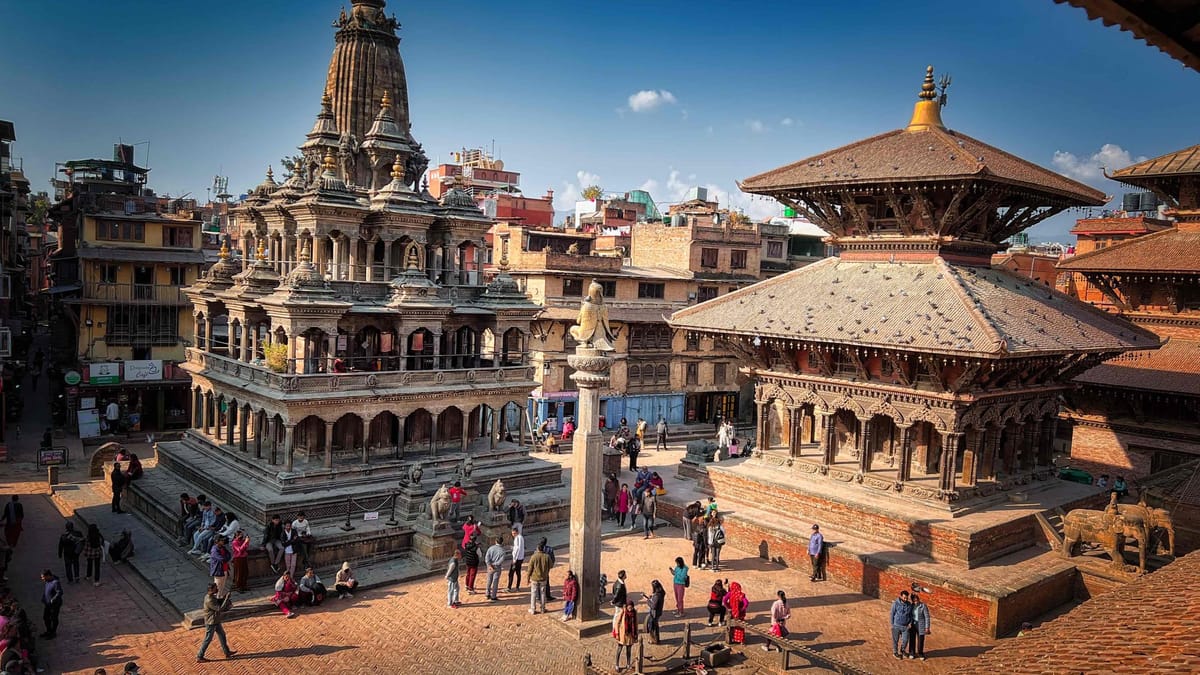
I’ve never trekked to Everest Base Camp. I’ve flown past Everest at sunrise, on one of the mountain flights out of Kathmandu, and I’ll admit it was as beautiful and as emotional as everyone says. Cliché, but true. It was also a reminder, from a heated cabin, of how far that country is from help.
So picture a man in his early sixties. Fit enough, confident in the way people get after decades of solving problems with grit, money, and planning.
He’d wanted Everest Base Camp for years. The dream had aged well. Better than his knees.
He trained: daily walks, some stairs, and a few conversations with himself that ended the way those conversations always end, with basically the same routine the next week.
Then he booked the trek and chose the compressed itinerary. Fewer days, faster ascent, less acclimatization. The slower options cost more and took longer, and the pitch was persuasive. “Most people do fine.” “You’re fit, you won’t need the extra days.” It saved him money. Not a fortune, but enough to feel smart about.
The mountain started collecting interest around day three.
Altitude doesn’t negotiate
The first night above 3,000 meters, he didn’t sleep. Headache, nausea, no appetite: nothing cinematic, just the dull misery that makes everyone feel like they’re complaining too much. He played it down.
By day four he was slowing, stopping more, telling himself he was “just pacing” and looking at the scenery while his heart tried to punch its way out of his chest.
The guide noticed. He watched him walk, clipped an oximeter on his finger, and listened to him talk.
That night it went from uncomfortable to unsafe. He woke confused, dizzy, and short of breath lying still. When he stood, his balance was off. When he spoke, his words came out wrong.
The guide didn’t need a checklist. It looked like HACE, high-altitude cerebral edema, and HACE doesn’t improve at altitude. Oxygen and dexamethasone can buy time. What fixes it is getting lower, fast.
The rule nobody mentions at booking
There was a doctor nearby but no hospital, no ambulance, and no road. Just a lodge in Dingboche at about 14,500 feet, a satellite phone, and a narrowing set of options.
A helicopter could lift him out in the morning, weather permitting. And this is the rule that matters: payment comes before the helicopter does. A credit card, cash, or a guarantee from an insurer, assistance company, or trekking outfitter the operator trusts. There is no “we’ll sort it out later” desk in Dingboche. There’s a rotor, a pilot, and a business that doesn’t gamble on your insurance company’s mood.
The operators aren’t being callous. They’ve been burned, and so have the insurers. In early 2026, Nepal’s Central Investigation Bureau charged 32 people in a fake-rescue scheme that ran from 2022 to 2025: more than 300 suspect rescues, about $19.7 million billed to international insurers, and claims filed in the names of nearly 4,800 foreign trekkers.
The methods were creative, in a grim way. Guides allegedly slipped baking soda into food to cause stomach trouble that could pass for altitude sickness, or gave trekkers medication with too much water to bring on dizziness and nausea. Then the operator advised evacuation, flew the helicopter, and filed claims, sometimes billing each passenger on one flight as a separate rescue, backed by forged medical records and, in some cases, hospital admissions that never happened. Nine of the accused were produced in court; the rest were at large when the charges were filed.
None of this is new. Nepali media exposed the same playbook in 2018, and a government committee recommended action. The reforms that followed didn’t stop it.
What the fraud means for your claim
It matters to you in ways that aren’t obvious.
First, expect insurers to look harder. A claim from Nepal is now more likely to draw extra scrutiny, documentation requests, and delay, legitimate or not.
Second, if the charges hold up, some of the trekkers never knew. They got sick from spiked food, accepted the evacuation their guide recommended, and went home without knowing their policy had been used for an inflated claim. Whether their insurer holds that against them later is an open question, and a real one. If your insurer decides your evacuation was fraudulent, even though you were the unwitting patient, you’re in complicated territory with no clean way out.
Third, it changes what you should ask about your operator. The CIB charged operators, managers, hospital executives, and guides together. These weren’t strangers on the trail; they were part of the trekking industry. A cheap operator with unclear affiliations isn’t just a quality risk. It’s a fraud risk.
The second bill is the one that ruins people
Once he was lower, the real costs began: evaluation, oxygen, monitoring, a transfer to Kathmandu, a hospital stay. Then the question nobody wants to face: can he fly home commercially, or does he need a medical escort?
A rescue helicopter is billed as a charter, not a seat, and it typically costs several thousand dollars. From around Namche Bazaar to Kathmandu, expect something like $3,000 to $5,000. From higher up, at Lobuche, Gorak Shep, or Base Camp, it can reach $6,000 to $10,000 or more, depending on weather, timing, and whether the thin air means the pilot has to make more than one trip.
The medical escort is the cost most people never factor in. If the doctors and the airline decide you’re not fit to fly home alone, you’re paying for extra seats, often in business class, plus a daily rate for a nurse or physician, and that can add $15,000 to $20,000. A stretcher or an air ambulance costs more. It doesn’t show up in the headline evacuation number. It shows up later, when you think the worst is behind you.
Add Kathmandu hospital costs, and the bill can be several times the price of the whole trip.
That’s where his insurance problems surfaced. His policy required a hospital admission to trigger evacuation benefits. It capped coverage at an altitude below parts of his route. It treated the helicopter as a reimbursable expense (pay now, maybe we’ll pay you back later) rather than a guaranteed service. And it left the insurer enough ambiguity to slow everything down.
The helicopter had already flown. The bills were still coming.
The fine print that breaks trekkers
A lot of standard travel insurance assumes hospitals, paperwork, receipts, and tidy timelines. Everest Base Camp has none of those.
The altitude cap. Many policies cap coverage at 3,000 or 4,000 meters. Base Camp sits at 5,364 meters. The number isn’t buried in legalese; people just don’t check it.
The hospital-admission trigger. Some policies tie evacuation coverage to a hospital admission, and the wording decides whether the admission has to come before the flight or can follow it. Above the small Khunde Hospital near Namche, there isn’t one. Pheriche has a seasonal aid post, and Gorak Shep, the last settlement before Base Camp, has no permanent medical facility. A policy that wants an admission first assumes infrastructure that doesn’t exist.
The mountaineering exclusion. Some insurers classify high-altitude trekking as mountaineering and exclude it. Read the activity definitions before you buy.
Reimbursement versus direct payment. Helicopter operators rarely fly without cash or a payment guarantee. A policy that reimburses you later isn’t the same as one that pays the operator now, and that’s the difference between getting on the helicopter and not.
The search-and-rescue gap. Some major insurers exclude search and rescue, the cost of finding you and getting you to where a helicopter can reach you, while covering medical evacuation from there to a hospital. Those sound like the same thing and are covered by different clauses. Read both.
What you actually need
Two things, in this order.
First, a way onto the helicopter. That means coverage that pays operators directly, or an evacuation membership whose payment guarantee is accepted in the field. If you’re trekking independently, without an established outfitter, your position is weaker. A large trekking company can usually guarantee payment with one phone call, and then only the weather decides. A solo trekker in a Dingboche teahouse has much less leverage, and needs airtight coverage more than anyone.
Second, coverage for what happens after. The helicopter ride is the opener. Kathmandu hospital costs, oxygen, specialist care, and a possible medical escort home are where the real money goes.
Evacuation memberships like Global Rescue handle the extraction, on their own terms. They don’t cover the hospital bills. A layered approach, an evacuation membership plus a medical policy written for high altitude, is more reliable than hunting for one product that does everything. (And before you count on a membership, read what it actually covers.)
A note on the Austrian Alpine Club
The Austrian Alpine Club (ÖAV) comes up in Everest Base Camp forums constantly, usually with “and it only costs about €80 a year.” That’s roughly right, and the club is legitimate: founded in 1862, open to non-Austrians, and joinable online through its UK branch. Its Alpenverein Weltweit Service, insured by Generali, pays up to €25,000 per person for search and rescue, covers repatriation without a cap, and pays up to €10,000 for medical treatment abroad. For European alpine trekking, it’s the rescue layer many experienced European hikers carry. (It’s a version of the membership trick: insurance sold as a club benefit.)
But Base Camp isn’t the Alps. The coverage excludes planned ascents of mountains over 6,000 meters. A standard Base Camp trek doesn’t come close, but tack on Island Peak, a popular add-on at 6,189 meters, and you’re outside it. Repatriation and medical coverage apply only during the first eight weeks of a trip abroad, which leaves out anyone past their first two months on the road. And you’re supposed to call its emergency line before transport or hospital admission; skip that, and what it pays for those costs can drop to €750. It’s a useful, inexpensive extra layer if your other coverage is solid. It doesn’t replace a direct-pay evacuation membership or real high-altitude medical coverage.
Before you book: four questions
What’s the altitude limit? It has to cover the highest point on your itinerary, and I’d want 6,000 meters for margin. Base Camp is 5,364 meters, and Kala Patthar, the viewpoint most trekkers climb, is about 5,545.
How is the activity classified? Confirm the policy covers high-altitude trekking explicitly and doesn’t reclassify it as mountaineering above some elevation.
What triggers the evacuation benefit? If it requires a hospital admission first, you may be paying for the helicopter yourself and hoping for reimbursement. The trigger should be a medical emergency, not a bureaucratic threshold.
Does the insurer pay operators directly? Direct billing isn’t universal. If your policy pays you back later, make sure you can cover the upfront cost in the field.
One more, and it matters more now than before the crackdown: vet your operator. Ask who owns the helicopter company they use, how long they’ve been operating, and whether they bill insurers directly. A reputable operator answers without hesitation. One who gets cagey has told you something.
The itinerary problem
The insurance question sits downstream of a more basic decision: how fast you climb.
Nobody publishes a reliable evacuation rate for Base Camp trekkers, and with hundreds of suspect rescues mixed into the totals, any figure you see deserves suspicion. Real evacuations happen for plenty of reasons: falls, infections, stomach bugs, and altitude illness that hits people who did everything right. But the cause most within your control is climbing too fast. The standard itinerary builds in acclimatization days at Namche Bazaar, around 3,440 meters, and Dingboche for a reason: each stop gives your body time to catch up before you go higher. Skipping or compressing them is how the man in this story ended up on the phone in Dingboche.
The compressed itinerary is cheaper. It’s also how a lot of helicopters get called. Build the trip around not needing the evacuation, and buy the coverage in case you do.